
A new class of drugs offers hope of a treatment for Alzheimer’s disease, British researchers announced last night.
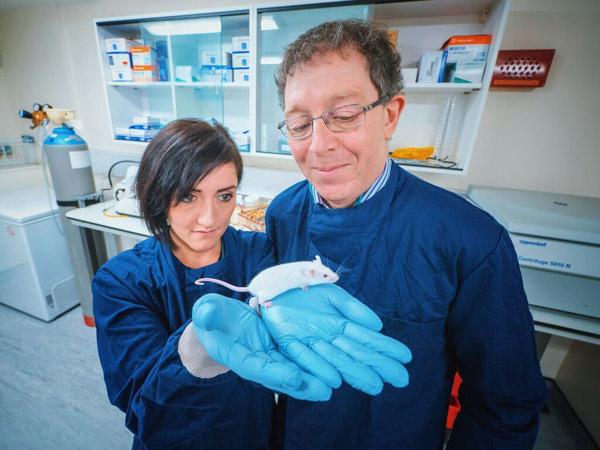 Tests on laboratory mice found the drug improved cognitive function and extended life-span.
The mice suffered from progressive brain degeneration of a kind similar to Alzheimer’s disease.
The researchers say their study, reported in the Journal of Clinical Investigation, shows the potential for seeking to target a protein called M1 muscarinic receptor. The drugs they developed are called allosteric ligands.
The work was undertaken at Leicester University, UK, but the research team has since moved to Glasgow.
Researcher Professor Andrew Tobin said: “The paper describes drug-like molecules that can restore memory loss and slow progression of prion neurodegenerative disease in a manner that relates to the potential of these drugs in human Alzheimer’s disease.
“We have been using mice whose brain cells are progressively dying, similar to what happens in Alzheimer’s disease. This project focuses on a particular protein in the brain, which is proposed to be involved in Alzheimer’s disease, and as such could be a potential target for new drugs.
“We have treated mice with a new class of drug, and found that these drugs can not only improve symptoms of brain degeneration, such as cognitive decline, but can also extend the life-span of these terminally-sick mice.”
He added: “This work may provide important information as to whether this protein is a viable drug target in the treatment of diseases associated with the progressive death of brain cells.
"This is of great importance to society, based on the fact that the treatment options for Alzheimer’s disease are very limited – there are no cures for Alzheimer’s disease and current treatments are focused on relieving some of the symptoms."
Journal of Clinical Investigation 19 December 2016
Leave a Reply