
The care of women’s cancers in poor countries needs urgent attention, experts say today.
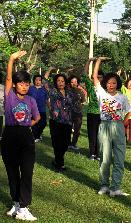 A series of articles for The Lancet published today (2 November), outlines the challenges of improving care of breast and cervical cancer in many countries of the world.
"Every year 800,000 women die of cervical and breast cancer, but where a woman lives will largely determine her chance of survival," states journal editor Richard Horton.
"Breast and cervical cancers receive far less funding, advocacy, and public and political attention in low- and middle-income countries," he adds.
Reasons for the discrepancy include "a belief that breast and cervical cancers are not a priority when compared with other women’s health issues, and that they are too difficult and expensive to prevent and treat in these settings," he writes. "But these are false perceptions."
The articles focus on breast and cervical cancers because they are the commonest cancers diagnosed among women in low- and middle-income countries. They are also the two women’s cancers for which cost-effective, feasible interventions and global policy options exist.
Professor Ophira Ginsburg of the University of Toronto, Toronto, Canada, and colleagues estimate that if present trends continue, the number of women diagnosed with breast cancer will increase to almost 3.2 million per year by 2030, and cervical cancer to more than 700,000 per year.
"These inequities highlight the urgent need for sustainable investments in the entire continuum of cancer control, from prevention to palliative care, and in the development of high-quality population-based cancer registries," she writes.
In a further article, Professor Lynette Denny of the University of Cape Town, South Africa, adds: "Population wide vaccination against human papillomavirus linked to cervical screening, at least once, for adult women has the potential to reduce the incidence of cervical cancer substantially.
"Investing in the health of girls and women is an investment in the development of nations and their futures."
Samarasekera, U. and Horton, R. Women’s cancers: shining a light on a neglected health inequity. The Lancet 2 November 2016 doi: 10.1016/S0140-6736(16)31798-6
Ginsburg, O. et al. The global burden of women’s cancers: a grand challenge in global health. The Lancet 2 November 2016 doi: 10.1016/S0140-6736(16)31392-7
Denny, D. et al. Interventions to close the divide for women with breast and cervical cancer between low-income and middle-income countries and high-income countries. The Lancet 2 November 2016 doi: 10.1016/S0140-6736(16)31795-0 [abstract]
Leave a Reply