
The World Health Organisation appealed today for countries across the world to come together to help end the misery of TB.
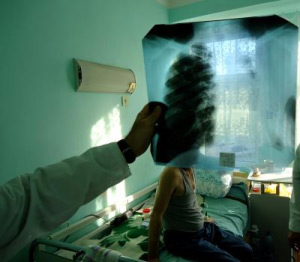 As it marks World TB Day today (24 March, 2016), the organisation has reaffirmed its commitment to ending TB by 2030.
But it says much work has still to be done to eliminate the disease, which is one of the top global killers.
Although 43 million lives have been saved since 2000, more than 4,000 people lose their lives every day to the infectious disease.
WHO says greater collaboration is needed within and across governments, and from partners from civil society, communities, researchers, the private sector and development agencies to ensure that its ambitious target is met.
TB programmes are being adopted in a number of countries where the disease is prevalent and new tools, extended access to care and links with other parts of government to reduce the financial costs borne by patients are being introduced.
Other countries are partnering with researchers to speed development of diagnostic tests, drugs and vaccines, and to improve delivery.
Successes include the universal access of TB care in India, which has the largest number of people suffering with TB and multidrug-resistant TB (MDR-TB) than any other country. It is expanding its capacity to test patients rapidly for drug-resistant TB and beginning to roll out bedaquiline, a new, WHO-recommended drug to treat MDR-TB.
In South Africa, there has been expansion of access to Xpert MTB/RIF, a WHO-recommended rapid molecular test for TB and drug-resistant TB, while in Thailand, efforts are focusing on ensuring that all residents have access to TB treatment.
Brazil and Vietnam are also investing in research to reduce the prevalence of TB.
However, WHO says that “formidable challenges” remain in the fight against the disease, including fragile health systems, human resource and financial constraints, and the serious co-epidemics with HIV, diabetes, and tobacco use.
Urgent action to address antimicrobial resistance is also crucial if TB is to be eliminated by 2030, says the organisation.
Leave a Reply