
People with heart cardiovascular disease could find that traditional Chinese exercises will improve their health and wellbeing.
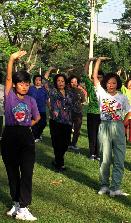 New research in the Journal of the American Heart Association revealed last night (1 March 2016) that exercise such as Tai Chi offers benefits to those who have heart disease, high blood pressure or among stroke patients.
“Traditional Chinese exercises are a low-risk, promising intervention that could be helpful in improving quality of life in patients with cardiovascular diseases,” said Dr Yu Liu, study co-author, and dean of the School of Kinesiology, at Shanghai University of Sport in China.
“But the physical and psychological benefits to these patients of this increasingly popular form of exercise must be determined based on scientific evidence.”
Dr Chen Pei-Jie, the study’s lead author, and research team reviewed 35 studies, comprising 2,249 participants from 10 countries, and found that Chinese exercises helped to reduce systolic blood pressure by more than 9.12 mm Hg and diastolic blood pressure by more than 5 mm Hg among people with cardiovascular disease.
There were small, but statistically significant drops in the levels of low-density lipoprotein and triglycerides, and Chinese exercises seemed to be associated with an improved quality of life and less depression among people with cardiovascular disease.
However, traditional Chinese exercises did not significantly improve participant’s heart rate, aerobic fitness level or scores on a general health questionnaire.
The review analysed studies that randomly assigned participants to groups performing traditional Chinese exercises such as Tai Chi, Qigong and Baduanjin, engaging in another form of exercise or making no change in activity level.
Pei-Jie C, Wang XQ, Li X et al. Traditional Chinese Exercise for Cardiovascular Diseases: Systematic Review and Meta-Analysis of Randomized Controlled Trials. Journal of the American Heart Association. March 2016. doi: 10.1161/JAHA.115.002562
Leave a Reply