
A quarter of people diagnosed with cancer after going to accident and emergency departments in London die within two months, a conference is set to hear today.
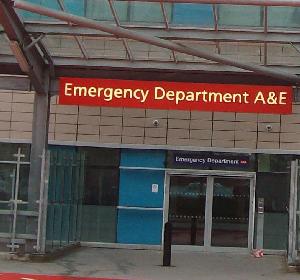 Researchers based at London Cancer, who will present their findings at the National Cancer Research Institute (NCRI) Cancer Conference in Liverpool, found that that average survival was less than six months. Only 36% of patients survived more than 12 months if their disease was identified as a hospital emergency case.
Half of all patients under the age of 65 had died within 14 months of their initial diagnosis, while half of people aged 65 to 75 had died by the fifth month after they had been told they had cancer. Only 25% survived beyond one year in that age group.
Half of patients over the age of 75 died after just three months and only 25% survived beyond 12 months.
The researchers found that people diagnosed through emergency routes tend to have more advanced cancers, which contributes to a poorer prognosis. Other factors include cancers that are harder to treat, their age, overall health and socioeconomic background.
The research team measured the survival of nearly 1,000 patients diagnosed following emergency presentation at 12 A&E departments across north east and central London and west Essex during 2013.
Study author, Professor Kathy Pritchard-Jones, said: “These shocking figures hammer home what we already know to be true: early diagnosis can make a huge difference in your chances of surviving cancer.
“Around a quarter of all cancer cases are being diagnosed following presentation in A&E and the vast majority of these are already at a late stage, when treatment options are limited and survival is poorer. And many of the patients diagnosed through A&E have other health conditions that may complicate their treatment.
“We need to find ways to diagnose patients earlier, and through managed pathways. This is crucial to improving the UK’s cancer survival to the standard of comparable countries.”
Professor Charles Swanton, chair of the 2015 NCRI Cancer Conference, said: “Emergency presentation is a challenge across the country – not just in London – and is a complex problem that may reflect a myriad of different factors. Initiatives driving scientific, medical and societal advances in early diagnosis will be central for us to achieve world-class cancer survival in the UK.”
Harpal Kumar, Cancer Research UK’s chief executive, said too many people are still diagnosed in hospital A&E departments.
“That must change if we’re serious about having the best cancer survival in the world,” he said.
“We’ve made good progress during the last seven years. But these figures show much more needs to be done to give patients the best chance of surviving their disease, regardless of their age or where they live.”
• The conference will also hear from a Cancer Research UK study that shows 20% of girls from ethnic minority backgrounds are not being vaccinated against the Human Papilloma Virus (HPV) because they feel they don’t need to have it.
In this first study of its kind, undertaken with an ethnically diverse group of girls, researchers found that 17% of girls from black backgrounds and 22% of girls from Asian backgrounds who had not been vaccinated said they did not expect to be sexually active before marriage.
Dr Alice Forster, study author and Cancer Research UK scientist at University College London, said: “Getting to the root of why some girls don’t have the vaccine will help us address these barriers to ensure every girl can receive this protection against the disease.”
Leave a Reply