
An Ebola vaccine being tested in the UK has shown signs of effectiveness in trials on volunteers, it was announced last night.
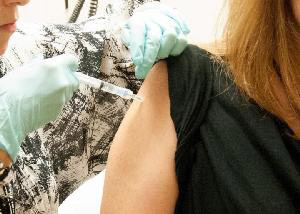 Experts say the vaccine is now ready for testing in West Africa in the hope it might help bring the Ebola epidemic to an end.
But a second vaccine may be needed as a "booster", they say.
The GSK/NIH vaccine is being tested in the USA, Switzerland and Mali as well as the UK.
The British researchers reported their findings in the New England Journal of Medicine.
They say the vaccine proved safe and successfully generated an immune response in the 60 volunteers who received it. But they say they are "not confident" the immune response is strong enough to provide protection.
Some 30 of the volunteers have been invited to test a booster shot using a second, different vaccine made by Denmark-based Bavarian Nordic.
Meanwhile in West Africa some 30,000 volunteers are set to test the new vaccine. They will include health workers and burial staff, the UK government said.
Researcher Professor Adrian Hill, from Oxford University, said: "People typically experienced mild symptoms that lasted for one or maybe two days, such as pain or reddening at the injection site, and occasionally people felt feverish.
"It’s very similar to what has been seen in previous studies with this general type of vaccine."
He added: "It is possible to be optimistic about the immune responses we’ve seen; it’s also hard to be really confident the levels would be protective. Larger trials in West Africa will be able to tell us more.
"We are also currently assessing another option, involving a booster dose, for improving immune response levels."
Dr Jeremy Farrar, director of the Wellcome Trust, which backed the study, said it was "very encouraging."
He said: "However, we still don’t know whether it will provide protection against Ebola infection in a real-world situation. That’s why trials in West Africa of this, and the other vaccines in development, must begin as soon possible.
"Falling infection rates in many of the affected regions increase the urgency of this research.
"While it is wonderful news that the epidemic is slowing in all three affected countries we cannot consider the crisis over until there are no more people infected by Ebola across the whole region of West Africa."
NEJM 28 January 2015
Leave a Reply