
People who are exposed to takeaway food outlets are at almost double the risk of obesity than those who are not, researchers warn today.
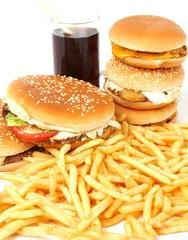 A paper published by the British Medical Journal says both the prevalence of takeaways in the UK and an increase of 29% of the amount of food eaten away from home over the past 10 years could be contributing to increasing levels of obesity.
Researchers from the University of Cambridge, UK, examined the extent to which exposure to takeaway food outlets in home and non-home environments was associated with eating takeaway foods, body mass index and the likelihood of being overweight or obese.
They also looked at takeaways around commuting routes between home and work by modelling commuting routes according to the mode of travel using the shortest distance along the street network between home and work addresses.
Using data from 5,422 eligible adults from the Fenland Study, a population-based cohort study of adults aged 29-62 in 2011, in Cambridgeshire, the team analysed food frequency questionnaires, the researchers estimated grams of daily intake of pizza, burgers, fried food and chips, as a marker of takeaway food consumption.
They also looked at average body mass index, which they calculated from measured height and weight, and odds of being overweight and obese, based on World Health Organisation definitions.
Results showed that individuals were exposed to 48% more takeaway outlets at work than at home, with the average exposure combining home and work neighbourhoods and commuting routes being 32 outlets.
Associations between takeaway exposure and diet were strongest in work environments, with evidence of a dose-response relationship. Combining the three domains (work, home and commute) revealed evidence of a positive and significant dose-response relationship between takeaway outlet exposure and takeaway food consumption.
The most exposed group of people ate an additional 5.7 grams per day compared with the least exposed group.
The group most exposed to takeaway food outlets in all environments combined were estimated to have a BMI 1.21 greater than those least exposed, with evidence of a dose-response effect. Those most exposed overall were also almost twice as likely to be obese, compared to those least exposed.
Researchers said that this first study of takeaway food outlet exposure at home, at work and during the daily commute, found an “environmental contribution to the consumption of takeaway foods, and especially to body mass index and the odds of being obese”.
Dr Alison Tedstone, director of diet and obesity at Public Health England, said the research added to the growing body of evidence about the environment that people live and work in affecting their health.
Tracy Parker, heart health dietician at the British Heart Foundation, which helped fund the study, said: “While this study can’t prove someone’s local environment can cause them to become obese, it’s vital we have the tools to make healthy choices when eating takeaways or food in a restaurant. Clearly signposting healthy meal options, providing clear nutritional information, and offering appropriate portion sizes can help this.”
Burgoine T et al. Associations between exposure to takeaway food outlets, takeaway food consumption, and body weight in Cambridgeshire, UK: population based, cross-sectional study. BMJ 14 March 2014;348:g1464 doi: 10.1136/bmj.g1464. [abstract]
Leave a Reply