
Young people’s DNA could be affected when they drink alcohol, a preliminary study has found.
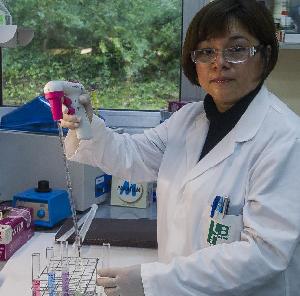
 Adela Rendón, a researcher at the UPV/EHU-University of the Basque Country, Spain, worked with the Autonomous University of Nayarit, in Mexico to be the first to document the damage done to the packaging of nuclear material during the early stages of alcohol abuse among young people.
The researchers say their findings show the potential long-harm caused to young people who over indulge in alcohol.
Rendón decided to study the oxidative effect of weekend alcohol consumption when she worked as a lecturer in clinical biochemistry at the National Polytechnic Institute in Mexico and saw that many students displayed a lack of attention and general malaise on Mondays after drinking alcohol over the weekend.
The students, all aged between 18 and 23, were divided into two groups: the control group made up of the students who did not drink alcohol and the study group of those who drank at weekends.
The activity of the alcohol enzyme dehydrogenase, responsible for metabolising ethanol into acetaldehyde, acetoacetate and acetone, was measured.
They found that students who drank sustained twice as much oxidative damage compared with the group that did not consume alcohol.
Because of this, they decided to assess whether the DNA was also affected using the ‘comet’ test, extracting the nucleus of the lymphocytic cells in the blood and subjecting it to electrophoresis.
If the chromatin is not properly compacted, if the DNA has been damaged, it leaves a halo, which is called ‘the comet tail’.
 They found that the chromatin of the exposed group left a small halo that was larger than that of the control group. There was damage in 8% of the cells in the control group and 44% in the exposed group.
However, the ‘comet tail’ did not exceed 20 nm, which it has to achieve to confirm the existence of considerable damage to the DNA.
“The fact is, there should not have been any damage at all because they had not been consuming alcohol for very long, they had not been exposed in a chronic way,” says Rendón.
“When we talk about youth alcohol abuse, we are referring to youngsters who drink alcohol without having become addicted.
“Addiction involves a more complex issue socially and psychologically speaking. This is social alcohol abuse, but which causes damage in the long term and you have to be aware of that.”
Rendón-Ramírez A., Cortés-Couto M et al. Oxidative damage in young alcohol drinkers: a preliminary study. Alcohol September 2013. doi:pii: S0741-8329(13)00114-6. http://www.ncbi.nlm.nih.gov/pubmed/24080163
Leave a Reply