
In the 24th century, victims of cardiac arrest are still likely to face a high risk of dying, according to Austrian researchers.
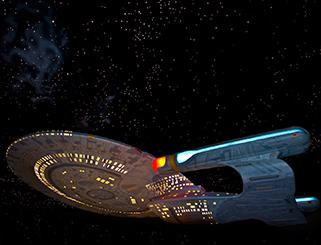 Their conclusions come from a study of the Star Trek series on television.
And fatal cardiac arrests are most likely to come through energy weapons and poisoning, rather than through heart attacks and other forms of heart disease, the researchers say.
The Viennese researchers embarked on their light-hearted enterprise because the series has successfully predicted – and even inspired – so many technological developments.
As all Trekkies known, illnesses are most likely to be diagnosed by a hand-held scanner known as a tricorder.
The researchers found a total of 96 cardiac arrests in 526 episodes of the series. They found that 90% of victims did not survive the arrest.
They also found that, unlike in the present, the place where the illness takes place did not affect survival. Victims are currently most likely to die when they collapse in the home – help gets summoned faster when they collapse in a public place and a patient in a hospital gets faster, expert treatment still.
In the Star Trek world this did not apply, they report – largely because of the use of teleportation to transport patients rapidly to medical facilities.
The findings have been published in the journal Resuscitation.
Researcher David Hörburger, of MedUni Vienna, said "The treatment of cardiac arrests is a very highly-researched field of modern medicine. Unfortunately, survival rates after an event such as this have continued to stagnate at a low level for many years.
"The aim of the study was to analyse its epidemiology and treatment in the way it is fictitiously portrayed in the 24th century in the world of Star Trek in order to find inspiration for the present day."
Where no guideline has gone before: Restrospective analysis of resuscitation in the 24th century. Resuscitation December 2014 [abstract]
Leave a Reply