
A vaccine against Ebola has been undergoing testing in Africa for nearly a year, researchers revealed today.
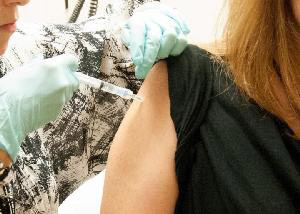 The tests in Uganda suggested the vaccine could stimulate the immune system against the virus – but the effects did not last for long.
Scientists said that the latest vaccines developed against Ebola are more powerful and are already being tested.
The project, reported in The Lancet, involved two vaccines, one against Ebola and one against the related Marburg virus.
Some 60 people in total tested the Ebola vaccine, 30 of them also receiving the Marburg virus.
Researchers said the study suggested the vaccine was safe in Africans.
Researcher Dr Julie Ledgerwood, from the National Institutes of Allergy and Infectious Diseases, USA, said: "This is the first study to show comparable safety and protection of an experimental Ebola vaccine in an African population.
"This is particularly encouraging because those at greatest risk of Ebola live primarily in Africa, and diminished vaccine protection in African populations has been seen for other diseases."
She added: "These findings have already formed the basis of a more potent vaccine, delivered using a harmless chimpanzee cold virus, which is undergoing trials in the USA, UK, Mali, and Uganda in response to the ongoing Ebola virus outbreak."
But, writing in the journal, Dr Saranya Sridhar, of the Jenner Institute, Oxford University, said: “With the uncharitable benefit of hindsight in view of the evolving 2014 Ebola outbreak, we must ask ourselves whether a filovirus vaccine should have been in more advanced clinical development.
"The international response to the present Ebola outbreak is an exemplar of the speed and purpose with which clinical vaccine development can progress and has set the benchmark against which future vaccine development must be judged.”
Dr Sridhar added: “This study is the first step on the aspirational road towards the deployment of filovirus vaccines in Africa and must serve to shake the metaphorical cobwebs that can stall our advance towards this destination."
Lancet 23 December 2014 [abstract]
Leave a Reply