
The British have dramatically cut their consumption of salt this century – and this has helped save thousands from stroke and heart disease, researchers say today.
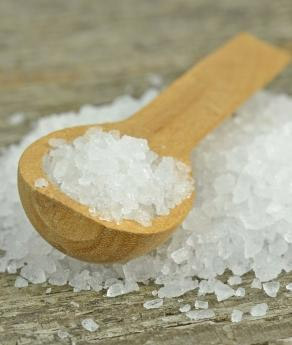 In the last ten years consumption of salt has fallen by 15% as food manufacturers responded to pressure and the public took steps to prevent high blood pressure.
Researchers say this may have had a "key role" in a 40% reduction in deaths from heart disease and a 42% cut in deaths from stroke.
This is equivalent to 9,000 deaths a year.
The levels of salt in the circulation were estimated from samples taken from nearly 3,000 people in 2003 and 2011.
Reporting in BMJ Open, the researchers, led by Professor Graham MacGregor, of Barts and The London School of Medicine and Dentistry, UK, say reduced cholesterol levels and reduced rates of smoking would also have played a part.
The findings were welcomed by public health campaigners.
Dr Alison Tedstone, of Public Health England, said: "The evidence shows that too much salt can lead to high blood pressure which can increase the risk of conditions such as heart disease and stroke, so continuing the work to reduce salt intakes to no more than 6g per day is more important than ever."
Victoria Taylor, of the British Heart Foundation, said: “While the reductions in average intakes of salt are a positive change, we mustn’t forget that they are still well above the recommended maximum of 6g a day for adults.
“As most of the salt we eat is already in our food, it is important that the food industry now works towards meeting the new salt reduction targets to make sure that we can continue to reduce the salt in our diet.”
Salt reduction in England from 2003 to 2011: its relationship to blood pressure, stroke and ischaemic heart disease mortality. BMJ Open 15 April 2014; doi:10.1136/bmjopen-2013-004549 [abstract]
Leave a Reply