
Scientists believe they may have discovered a breakthrough in targeting an enzyme that plays a critical role in the development of some cancers.
 The protein-cleaving enzyme Taspase1 is raised in cancer cells of patients with head and neck tumours and is also critical for the development of leukaemias.
Now scientists at the University Medical Centre of Johannes Gutenberg University Mainz, Germany, have identified a novel strategy to target it.
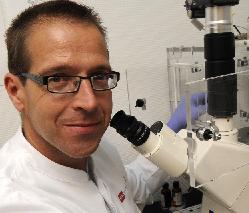
Professor Roland Stauber, who led the study, said: “Several protease inhibitors have already been developed and are being used against some of these ‘disease-causing’ enzymes with varying success in the clinics.
“However, one representative of this protein family in particular – the protease Taspase1 – is troubling researchers worldwide.
“We currently do not have any drug that can inhibit Taspase1. And we still do not understand in sufficient detail how this enzyme really works.”
But he and his team of researchers have gained new insights into the enzyme’s molecular functions and identified a novel approach to developing drugs that may be used to inhibit Taspase1.
The results are published in The FASEB Journal.
“Previously, it was assumed that two Taspase1 enzymes had to come together in order to be active and cleave other cellular proteins,” says Prof Stauber.
“Our latest results not only demonstrate that one Taspase1 molecule is sufficient for this, but also that we can even block the tumour-promoting properties of the enzyme by ‘gluing’ two Taspase1 molecules together.”
The team is now looking for chemical substances that could function as molecular Taspase1 “adhesives”.
Allosteric inhibition of Taspase1’s pathobiological activity by enforced dimerization in vivo. C. Bier et. al. The FASEB Journal. 26:8. 23 May 2012. doi:10.1096/fj.11-202432
Leave a Reply