
Eating plenty of strawberries and blueberries could delay memory decline in older women by two and a half years, researchers reported yesterday.
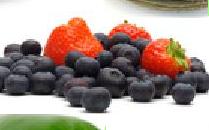 Researchers at Brigham and Women’s Hospital (BWH), Boston, USA, who looked at the beneficial qualities of flavonoid rich berries for women, said that increased consumption of blueberries and strawberries was linked to a “modest reduction” in the rate of memory decline in older women.
The findings, published in the Annals of Neurology found that high intake of the chemicals anthocyanidins and total flavonoids, found in berries, was associated with reduced memory decline, while women who had higher berry intake had delayed memory decline by up to 2.5 years.
Dr Elizabeth Devore, the lead author and a researcher in the Channing Laboratory at BWH, said their study was unique because it was conducted on a large scale over a long period of time.
The research team used data from the Nurses’ Health Study – a cohort of 121,700 female, registered nurses between the ages of 30 and 55 – who completed health and lifestyle questionnaires beginning in 1976.
Since 1980, participants were surveyed every four years regarding food consumption and between 1995 and 2001, memory was measured in 16,010 subjects over the age of 70 years, at two-year intervals.
Women included in the present study had a mean age of 74 and mean body mass index of 26.
“Among women who consumed two or more servings of strawberries and blueberries each week we saw a modest reduction in memory decline,” explained Dr Devore “This effect appears to be attainable with relatively simple dietary modifications.
“We provide the first epidemiologic evidence that berries appear to slow progression of memory decline in elderly women.
“Our findings have significant public health implications as increasing berry intake is a fairly simple dietary modification to reduce memory decline in older adults.”
Dietary Intake of Berries and Flavonoids in Relation to Cognitive Decline. Devore, E et al. Annals of Neurology. April 26, 2012. DOI:10.1002/ana.23594.
Leave a Reply