
French researchers say they have developed a vaccine that could counter the effect of house dust mites on asthma patients.
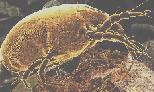 The vaccine targets a specific substance shed by the dust mite and known to aggravate allergic reactions.
Directly injecting into the muscle of an asthmatic mouse led a nanovector to significantly reduce both inflammation and hypersensitivity to the allergen Derf1 (Dermatophagoides farinae 1), a very common allergen carried by the dust mite, researchers said.
Research scientists at Inserm and CNRS, University of Nantes, tried try a vaccination technique using the DNA of the allergenic substance, working on specific DNA sequences of the allergen responsible for the allergy.
Writing in Human Gene Therapy, March 2012, Bruno Pitard, director of the Biotherapy Innovations team at the Institut du thorax, said researchers first tried the DNA-based vaccination against the allergen Derf1.
They associated useful genetic sequences of the allergen Derf1 with a nanovector consisting of a synthetic polymer. This DNA sequence, transported by a “molecular taxi” into the muscle cells that ensure protein synthesis of the allergen, modulated the allergic response in asthmatic animals.
In the asthmatic mice, the vaccine triggered the production of specific anti Derf1 antibodies and a specific cellular response to Derf1. Two injections were administered at three-weekly intervals and led to significantly reduced hypersensitivity of the airways and levels of inflammatory cytokines.
DNA/amphiphilic block copolymer nanospheres reduce asthmatic response in a mouse model of allergic asthma. Beilvert F et al. Human Gene Therapy. March 19 2012.
Leave a Reply