
Scientists are looking for treatments for human heart disease from an amazing feature of the python, it was revealed last night.
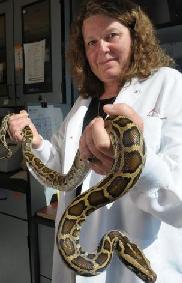 The snake’s heart can double in size after a meal – often after the animal has not eaten for as long as a year.
Now a study at the University of Colorado, USA, suggests the fatty acids in the bloodstream of feeding pythons can help to promote healthy heart growth.
The CU-Boulder research, led by Professor Leslie Leinwand, found that the day after eating, the amount of triglycerides in the blood of Burmese pythons increased by more than fifty-fold.
Despite that, there was no evidence of fat deposits in the heart and there was an increase in the activity of a key enzyme known to protect the heart from damage.
The team analysed proteins, lipids, nucleic acids and peptides present in the fed plasma using gas chromatography to identify the chemical make-up of blood plasma in pythons that had been fed.
They then injected fasting pythons with either the blood plasma from these pythons or a reconstituted fatty acid mixture that mimicked it.
In both cases, the pythons showed increased heart growth and indicators of a healthy heart. The same results were also recorded when mice were fed either of the plasma mixtures.
“We found that a combination of fatty acids can induce beneficial heart growth in living organisms,” said Cecilia Riquelme, first author.
“Now we are trying to understand the molecular mechanisms behind the process in hopes that the results might lead to new therapies to improve heart disease conditions in humans.”
Science October 27 2011
Leave a Reply