
Scientists have identified a cell component which plays a key role in triggering allergic responses to cats or house mites.
 The breakthrough by immunologists at the University of Nottingham, UK, will increase understanding of how the body’s immune system identifies and reacts to allergens.
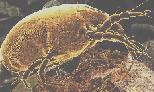
Drs Amir Ghaem-Maghami and Martinez-Pomares in the University’s School of Molecular Medical Sciences, discovered the component which triggers allergic responses to cat dander, microscopic pieces of cat skin that easily become airborne, or house mites.
“There has been a sharp increase in the prevalence of allergies over the past few decades and allergic asthma among children has reached epidemic proportions in many industrialised countries, including the UK,” said Dr Ghaem-Maghami.
“Despite improvements in patient care, three people die every day in the UK from asthma, and most therapies target symptoms rather than curing the condition.
“A better understanding of how the interaction between allergens and the immune system leads to allergy is vital if we are to develop more effective and efficient treatments for this debilitating condition.”
Their work, funded by Asthma UK and published in the Journal of Biological Chemistry, focused on the role of the mannose receptor (MR), a receptor found on the surface of dendritic cells, which are among the first in the immune system to into contact with allergens.
The team discovered that the MR binds to a wide range of allergens and plays an important role in the allergic response to house dust mite allergens.
Biol. Chem. jbc.M111.220657. First Published on February 18, 2011, doi:10.1074/jbc.M111.220657
Leave a Reply