
New findings suggest major problems with the drive to revolutionise medicine through programming stem cells.
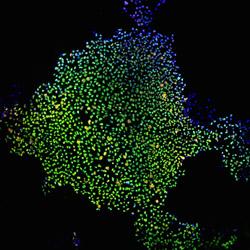 Scientists have reported much greater rates of mutation than expected – raising questions about the ability of current technology to ensure the safety of procedures.
A study led by scientists at the University of California, San Diego, USA found that the genetic material of reprogrammed cells may be compromised.
Extensive genetic screening of these induced pluripotent stem cells should become standard practice before these stem cells are used clinically, they conclude.
Writing in the March 3 issue of the journal Nature, Dr Kun Zhang, an assistant professor of bioengineering in the UC San Diego Jacobs, said before cells are put back in the human body for therapeutic purposes, scientists had to be sure the cells contain the same genome as the recipient, with no serious mutations.
He, with a team of researchers, examined 22 different stem cell lines obtained from seven research groups, all of which used different methods to reprogramme skin cells into pluripotent stem cells.
In all the cell lines, they found protein-coding point mutations, an estimated six mutations per exome – the part of the genome that contains the genetic instructions for making proteins and other gene products.
"Every single stem cell line we looked at had mutations. Based on our best knowledge, we expected to see ten times fewer mutations than we actually observed," said Dr Zhang.
While some of the mutations appeared to be silent, the majority did change specific protein functions, including those in genes associated with causative effects in cancers.
Professor Lawrence Goldstein, co-director of the study, said: “Reprogrammed stem cells provide an important new tool in the fight against human disease, but to use these cells directly in the clinic, we must ensure that they are safe and that we are able to define their structure and behaviour in the most precise terms.
"Our studies open a new window into the genetic behaviour of these important types of stem cells and begin to define some new and straightforward safety standards that may help accelerate their use in clinical settings.”
A second study from Helsinki, Finland, and Toronto, Canada, has identified genetic abnormalities associated with reprogramming adult cells to induced pluripotent stem (iPS) cells.
Reporting in Nature, researchers showed that the reprogramming process for generating iPS cells is associated with inherent DNA damage.
Dr Andras Nagy, of the Samuel Lunenfeld Research Institute of Mount Sinai Hospital, warns: "Our analysis shows that these genetic changes are a result of the reprogramming process itself, which raises the concern that the resultant cell lines are mutant or defective.
"These mutations could alter the properties of the stem cells, affecting their applications in studying degenerative conditions and screening for drugs to treat diseases. In the longer term, this discovery has important implications in the use of these cells for replacement therapies in regenerative medicine."
Leave a Reply