
British researchers have unveiled novel images showing for the first time how the human brain loses consciousness.
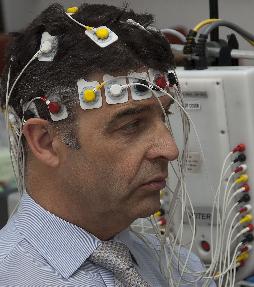 The Manchester scientists have developing a new imaging system to capture electrical activity deep within the brain.
The results of the work were revealed at the European Anaesthesiology Congress in Amsterdam, Holland, at the weekend.
Professor Brian Pollard, of Manchester University, said the scans supported theories that consciousness comes from groups of brain cells, known as neural assemblies, working together.
When humans lose consciousness, these assemblies cease to work together.
The findings came from a scanning technique called fEITER or functional electrical impedance tomography by evoked response, developed by engineer Professor Hugh McCann.
The device carries out electrical scans of the brain 100 times a second – creating a picture of electrical activity throughout the brain.
Professor Pollard said work was under way in studying patients who have undergone anaesthesia for surgery. The first stage of the research involved 20 healthy volunteers.
Professor Pollard said: "We have been able to see a real time loss of consciousness in anatomically distinct regions of the brain for the first time. We are currently working on trying to interpret the changes that we have observed.
"We still do not know exactly what happens within the brain as unconsciousness occurs, but this is another step in the direction of understanding the brain and its functions."
He added: "If its power can be harnessed, then it has the potential to make a huge impact on many areas of imaging in medicine. It should help us to better understand anaesthesia, sedation and unconsciousness, although its place in medicine is more likely to be in diagnosing changes to the brain that occur as a result of, for example, head injury, stroke and dementia."
Leave a Reply