
A South American tree frog has offered a range of proteins which British researchers believe could become drugs for a range of common conditions.
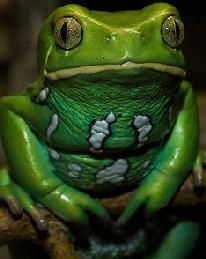 The scientists from Queen’s University, Belfast, Northern Ireland, extracted chemicals from the Waxy Mountain Frog, a tree frog that is commonly found in the Americas.
A second amphibian, the Giant Firebellied Toad, has also yielded up chemicals.
The scientists are collecting proteins which can control the growth of blood vessels, a process known as angiogenesis.
They believe this could lead to treatments for diabetes, stroke and transplants – where blood vessel repair is important. And they could also lead to cancer treatments – as preventing blood vessel growth can help prevent cancer development.
Researchers say the animals are unharmed during the research. The animals are captured in the wild and secretions extracted before they are released.
Last night the project was one of the finalists in the Medical Futures Innovation Awards in London, UK.
Researcher Professor Chris Shaw said: "Because of its huge potential, angiogenesis has been a prime target for drugs development research over the past forty years. But despite an investment of around four to five billion dollars by scientists and drugs companies around the world, they have yet to develop a drug that can effectively target, control and regulate the growth of blood vessels.
“The aim of our work at Queen’s is to unlock the potential of the natural world – in this case the secretions found on frog and toad skins – to alleviate human suffering. We are absolutely convinced that the natural world holds the solutions to many of our problems, we just need to pose the right questions to find them.
“It would be a great shame to have something in nature that is potentially the wonder drug to treat cancer and not aim to do everything in our power to make it work.”
Leave a Reply