
British and German researchers may have broken the genetic secrets of "gigantism", the condition which causes people to grow abnormally large.
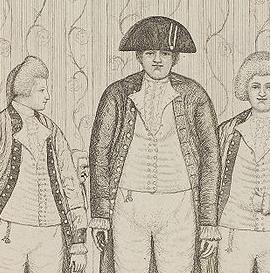 A genetic study, conducted in London and Germany, suggests the disease is no more than 1,500 years old.
Up to 300 people still carry a mutation which puts them at risk of the condition, which is caused by a tumour of the pituitary gland, and is also known as acromegaly.
The findings came after anthropologists from the Johannes Gutenberg University Mainz, Germany, obtained DNA from the skeleton of the 18th century "Irish Giant", preserved in the Hunterian Museum in London.
The "Giant", Charles Byrne, reached at least 7ft 7in in height and died aged 22.
They found the man shared a common ancestor with some modern Irish families who also suffer from the disorder.
The findings have been published this month in the New England Journal of Medicine.
Researcher Professor Patrick Morrison, of Barts and the London School of Medicine, said: "The benefits to patients locally are that we now have a genetic blood test that families at risk of this condition can choose to have, which allows early detection and prevention of excessive growth."
Researcher Professor Márta Korbonits, also of Barts and the London, said: "The most important clinical aspect of our study is that it is now possible to trace down carriers of this gene in time and treat patients before they grow to be a giant."
AIP Mutation in an 18th Century Giant and Contemporary Families with Pituitary Adenomas. Chahal, H.S. et al. The New England Journal of Medicine January 6 2011; 364:43-50
Leave a Reply