
A revolutionary blood pressure measuring device is unveiled today by British scientists.
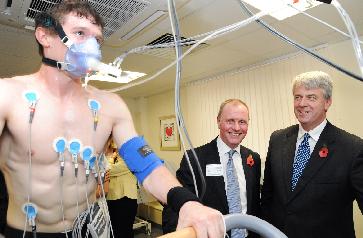 The device will record blood pressure deep within the body – creating the potential for radical improvements to efforts to prevent heart disease and stroke.
Researchers at Leicester University, UK, have worked with a company in Singapore on the project.
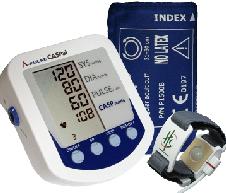
The new device measures the blood pressure close to the heart, known as the central aortic systolic pressure (CASP).
Developers say it will give a better indication of the risks posed by raised blood pressure – giving a more accurate reading than measurements on the arm.
The device will still require measurements to be taken from the arm – but as well as the usual cuff a sensor on the wrist measures something called the pulse wave.
The developers say they have been able to use this to calculate blood pressure close to the heart with a high degree of accuracy.
 Researcher Professor Bryan Williams said: "I am under no illusion about the magnitude of the change this technique will bring about.
"It has been a fabulous scientific adventure to get to this point and it will change the way blood pressure has been monitored for more than a century.
"The beauty of all of this, is that it is difficult to argue against the proposition that the pressure near to your heart and brain is likely to be more relevant to your risk of stroke and heart disease than the pressure in your arm."
His Singapore colleague Dr Choon Meng Ting said: "It will empower doctors and their patients to monitor their central aortic systolic pressure easily, even in their homes and modify the course of treatment for blood pressure-related ailments."
British health secretary Andrew Lansley praised the development, which he inspected last year.
He said: "This is a great example of how research breakthroughs and innovation can make a real difference to patients’ lives."
The British Heart Foundation warned it could be some time before the new devices become standard in doctor’s surgeries.
Judy O’Sullivan, of the Foundation, said: "Previous research by these scientists has shown that measuring pressure close to the heart is a better indicator of the effectiveness of treatment for high blood pressure than the standard method.
"However, further research is needed before we can be certain of its superiority in the doctor’s surgery.
"So while this new device is a step in the right direction, the conventional and well established way of measuring blood pressure will be what most patients experience for some time to come."
Leave a Reply