
The British scientist who developed test-tube baby treatment gained a Nobel Prize yesterday.
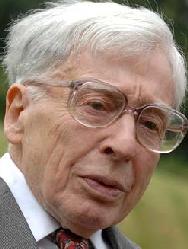 Robert Edwards, based in Cambridge, UK, spent a quarter of a century perfecting IVF techniques before the birth of Louise Brown in 1978.
His success has since led to the birth of some four million people worldwide following the procedure.
The Nobel Prize committee said his work had made a major contribution to aiding the ten per cent of couples who find they cannot have children.
It said Edwards had identified that the life cycle of human eggs was different from rabbits – and had made "fundamental discoveries" which made IVF possible.
A spokesman for the Nobel Prize committee said: "Louise Brown and several other IVF children have given birth to children themselves; this is probably the best evidence for the safety and success of IVF therapy.
"Today, Robert Edwards’ vision is a reality and brings joy to infertile people all over the world."
Edwards was too ill to attend the announcement in Stockholm, Sweden, yesterday but colleagues gathered to congratulate him.
Professor Martin Johnson, professor of reproductive sciences at Cambridge University, UK, recalled studying with the Nobel prize-winner.
He said Edwards was "a man ahead of his time".
He said: "Bob is delighted, as are all his friends, family, and work colleagues at the journal office of Reproductive BioMedicine Online. The Nobel Prize is the last major award, following on from the Lasker Prize that he won about ten years ago, that enables Bob to achieve his proper recognition.
 "It is truly wonderful that such an engaging, warm and generous person, as well as a visionary in science, can be acknowledged in this way for all his many achievements.
"His achievements are not just over four million babies worldwide born through assisted reproductive technology, but also the way that he transformed the whole approach to research and care in reproductive medicine and gynaecology."
He said Edwards was especially sad that his colleagues Patrick Steptoe and Jean Purdy had not lived to share the prize.
Dr Luca Gianaroli, chairman of the European Society of Human Reproduction and Embryology – which Edwards helped found, said: "There can be few embryologists or IVF specialists today whose career and expertise have not been shaped in some way by ESHRE’s training and journals – and this is something we all owe ultimately to Bob."
Leave a Reply