
British researchers are hoping to revive a promising anti-cancer drug derived from a wild mushroom that grows on caterpillars.
The mushroom, cordyceps, is used in Chinese medicine and cancer researchers first took an interest in it more than 50 years ago.
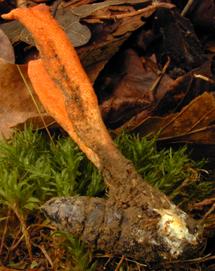 The drug proved ineffective – but now researchers in Nottingham, UK, say that detailed studies could help find uses for it.
The drug cordycepin proved unable to last long enough in the human body to achieve its objectives.
But the Nottingham team say they now hope to work out which cancers it works best on – and how it might be used to boost other cancer drugs.
Studies show that at low doses the drug can prevent cells growing – and at high doses it can prevent cells sticking together.
Researcher Dr Cornelia de Moor, of Nottingham University, said: "Our discovery will open up the possibility of investigating the range of different cancers that could be treated with cordycepin.
"With this knowledge, it will be possible to predict what types of cancers might be sensitive and what other cancer drugs it may effectively combine with. It could also lay the groundwork for the design of new cancer drugs that work on the same principle."
Professor Janet Allen, who directs research for the British Biotechnology and Biological Sciences Research Council, added: "The knowledge generated by this research demonstrates the mechanisms of drug action and could have an impact on one of the most important challenges to health."
Leave a Reply